any ai connected to innernet can make and run your agents for you. say what you want in plain words, teach the agent one thing and ask it back before any code runs, and let a coding agent wire it in end to end.
agent memory · step 4 of 8
make one from any chat
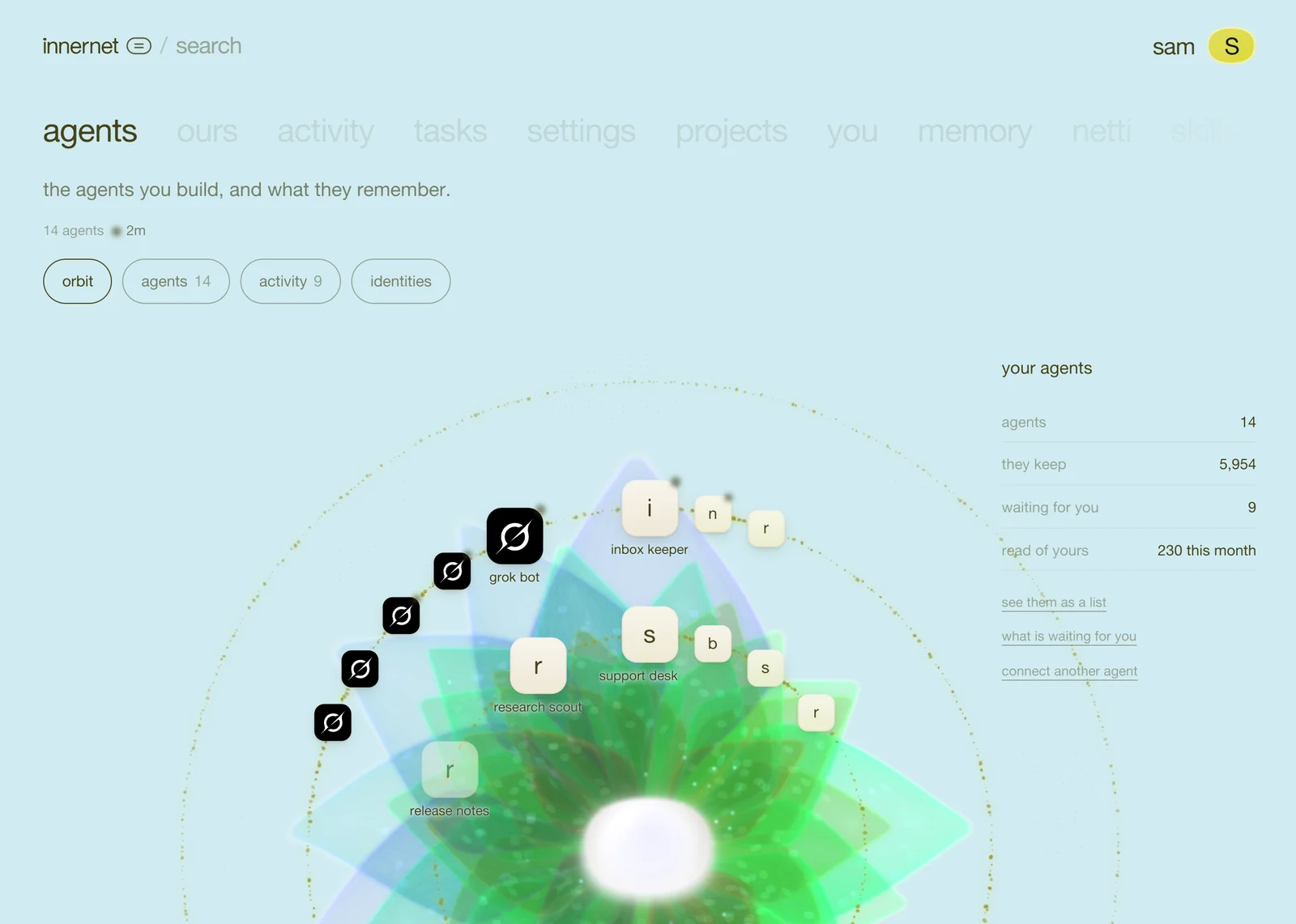

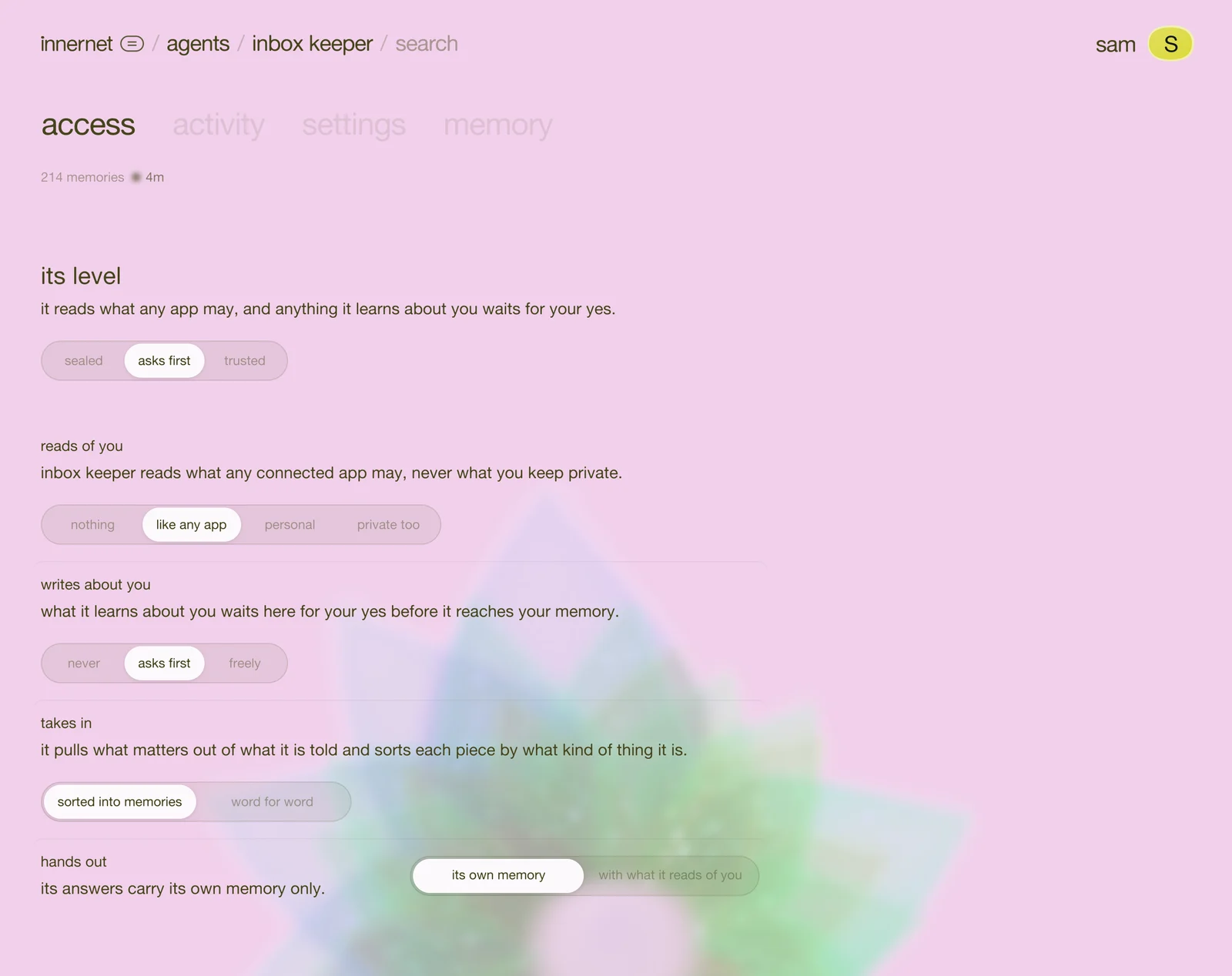
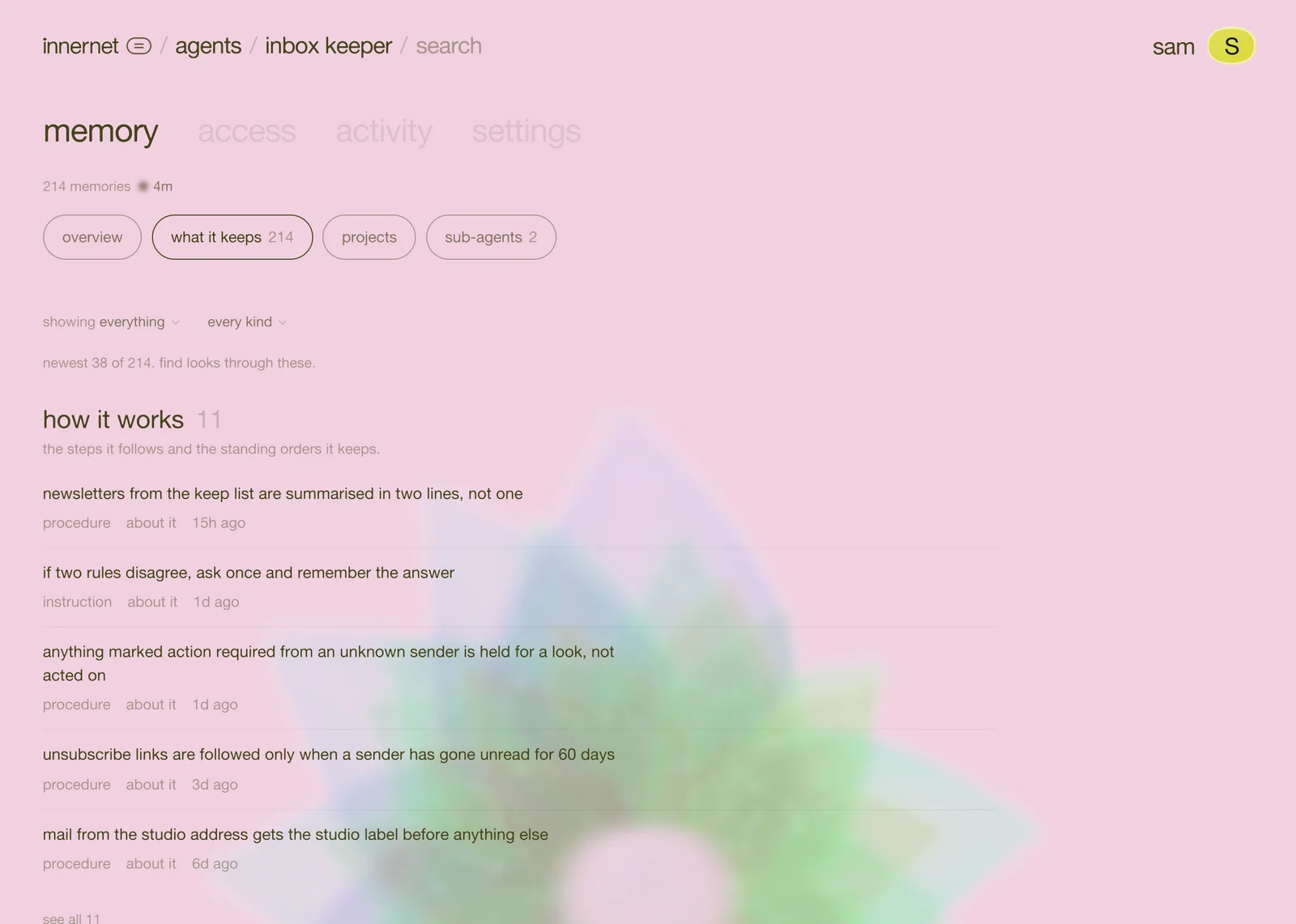
once an ai is connected to innernet as you (Claude, ChatGPT, Cursor, Claude Code, Codex, Grok Bot, any of them), it can make and run your agents for you. you don't need the tool names. say what you want, the way you'd say it to a person.
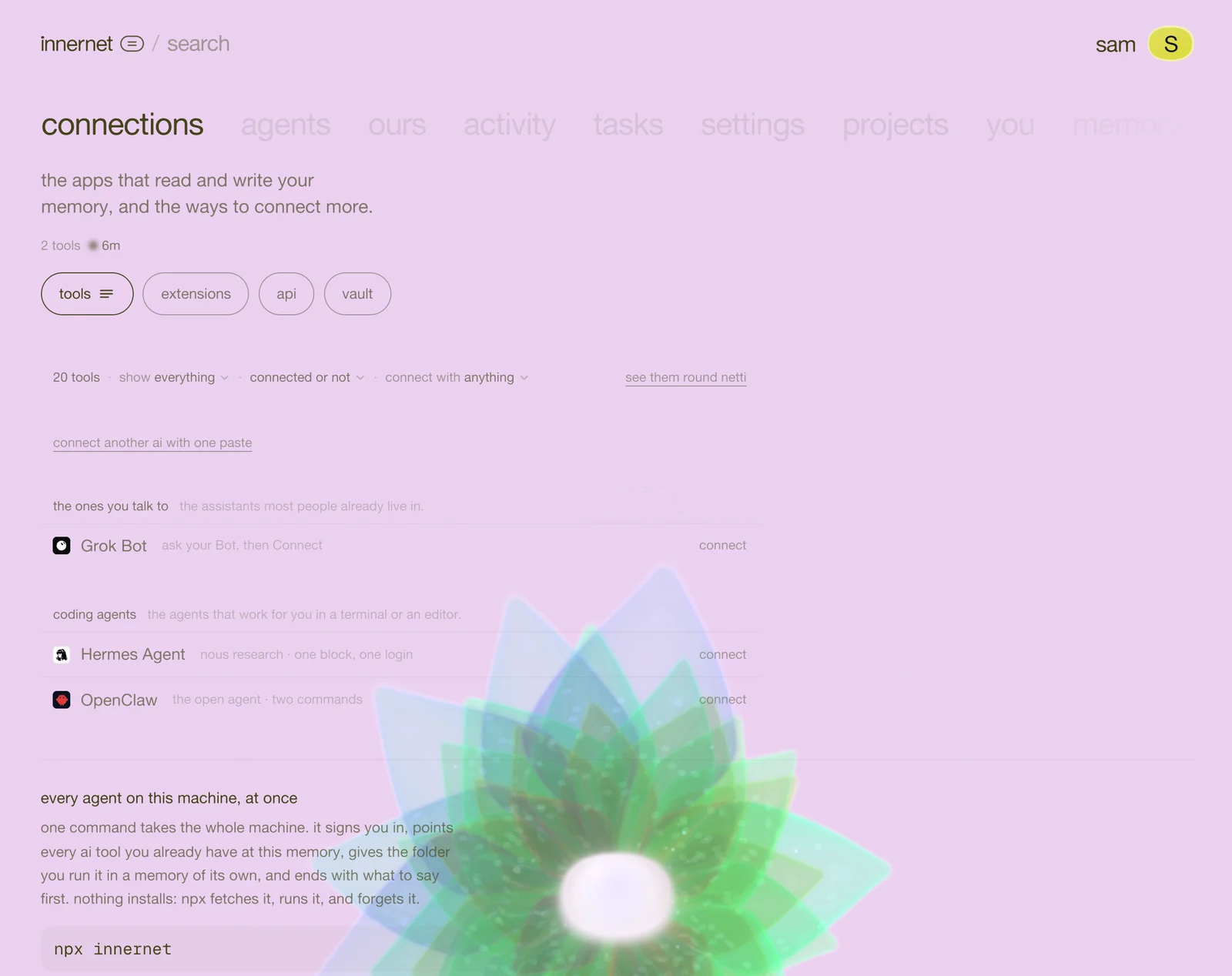
not connected yet? connect your ai tools takes a minute, or run npx innernet once.
in a coding agent: the whole thing, end to end
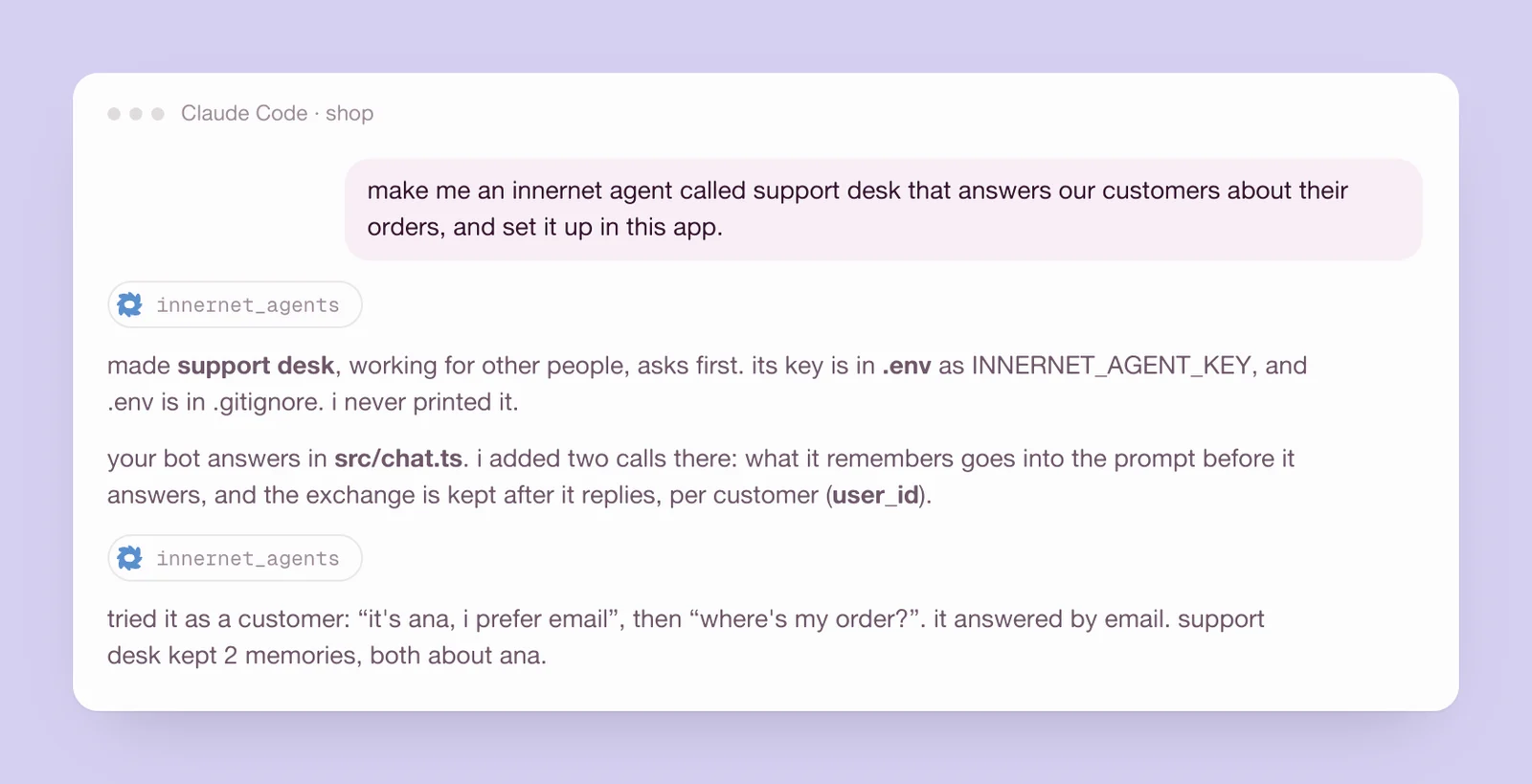
in Claude Code, Cursor or Codex, in the folder your agent lives in, say:
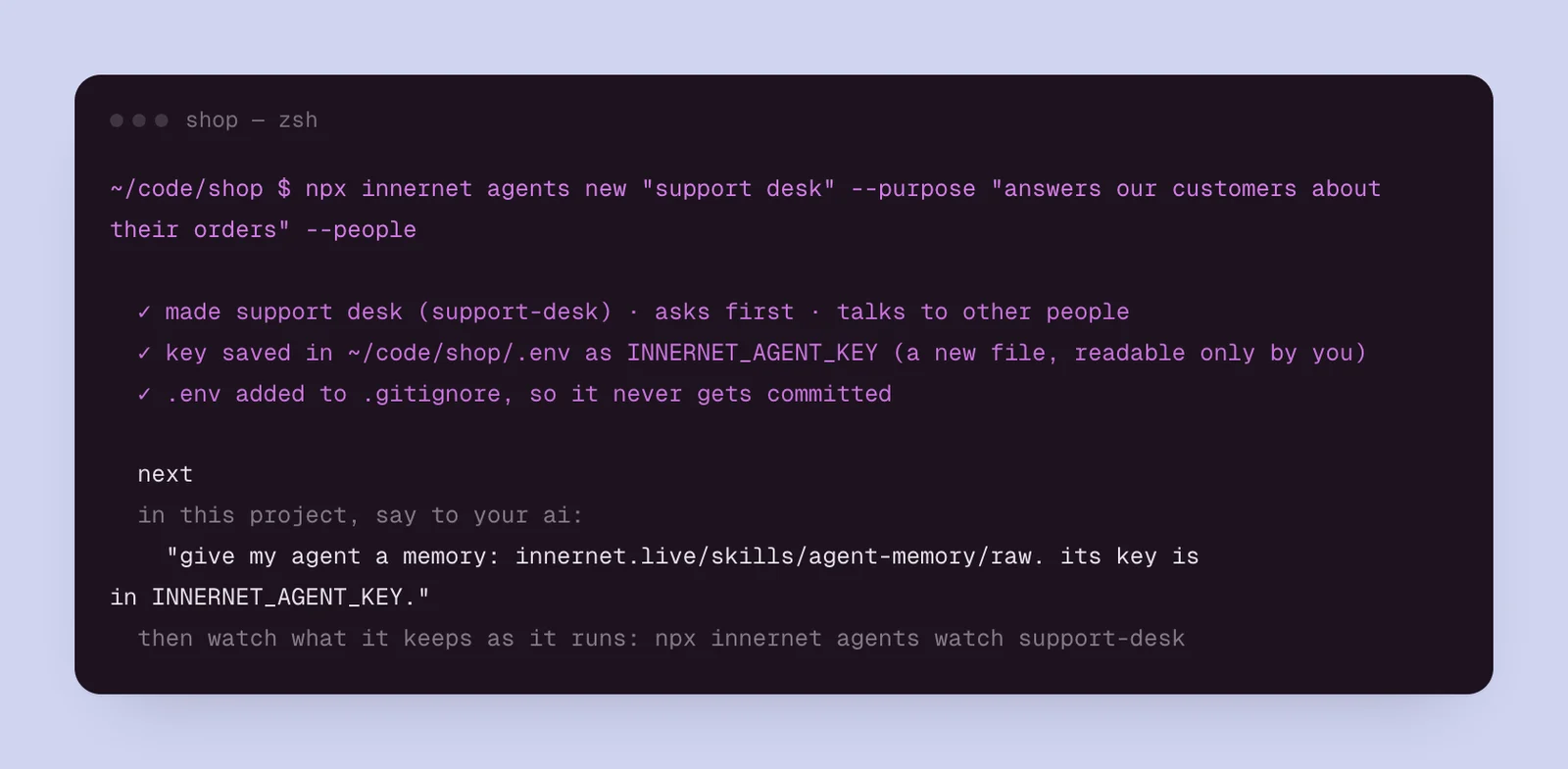
make me an innernet agent called support desk that answers our customers about their orders, and set it up in this app.it does every step on its own:
- makes the agent and its key, in one call.
- puts the key straight into where the agent runs, as
INNERNET_AGENT_KEYin.envor your host's secrets. never in the chat, never in a commit. - reads give an agent a memory and adds the two calls where your agent answers.
- runs it once, and shows you what the agent kept.
in a chat app: make it, then try it
in Claude, ChatGPT or Grok Bot, the ai can't reach your code, so the key waits until you're where the agent runs. make the agent here:
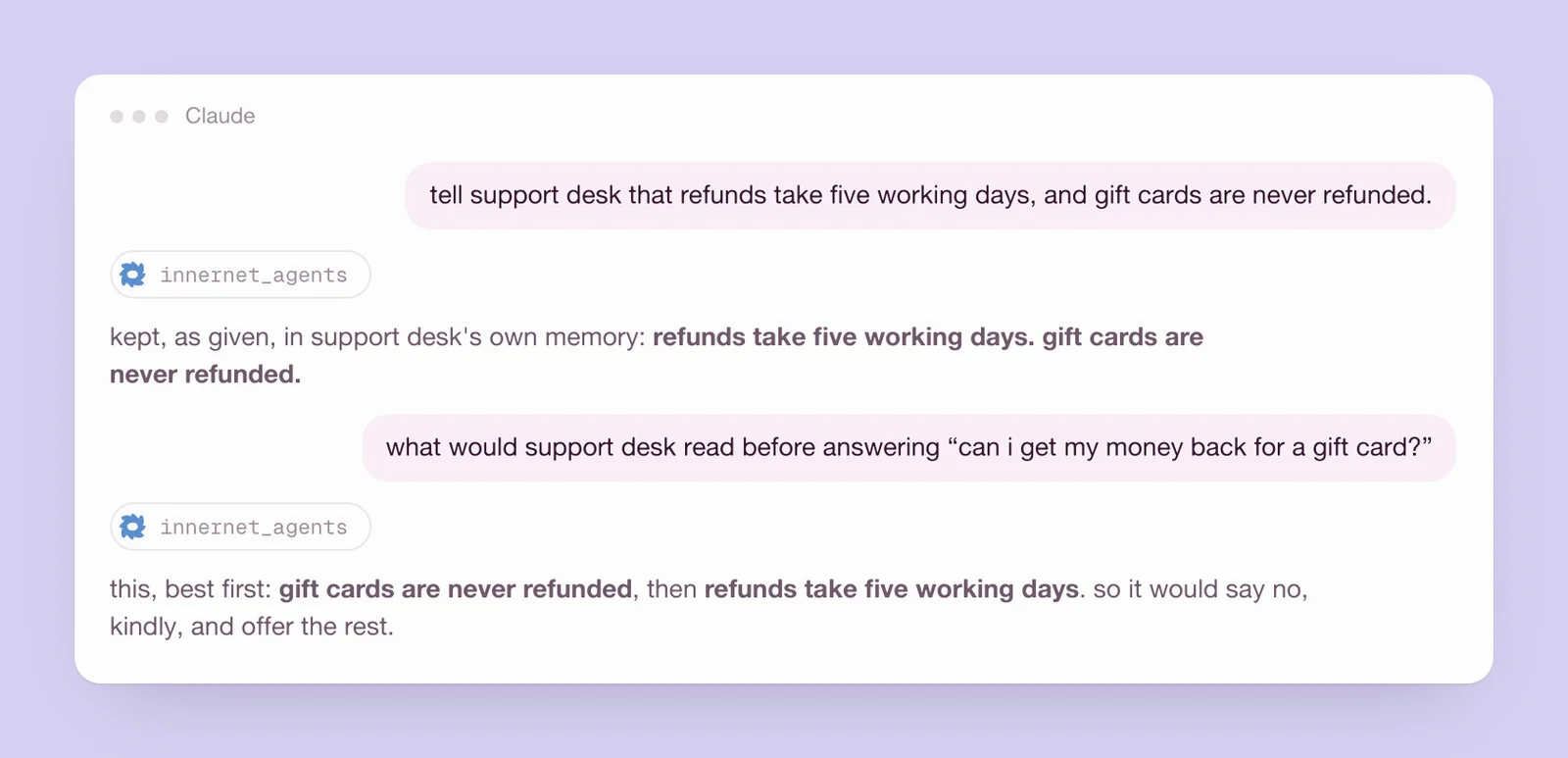
make me an agent in innernet called support desk. it answers our customers about their orders, and it works for other people.then try it before any code runs. teach it one thing, and ask it back:
tell support desk that refunds take five working days, and gift cards are never refunded.what would support desk read before answering "can i get my money back for a gift card?"the first keeps that one thing as given. the second shows the text the agent would be handed before it answers, best first. it's the quickest way to check an agent knows what you think it knows.
when you're ready to run it, make its key where it runs: npx innernet agents key support-desk in its folder, or settings → keys → make a key on its page.
things worth saying
| say | what happens |
|---|---|
| "what agents do i have in innernet?" | every agent you keep, with its access and how much it keeps |
| "give support desk a sub-agent for billing" | a sub-agent under it, with a memory and a key of its own |
| "what has support desk kept today?" | its newest memories, newest first |
| "tell inbox keeper i never want newsletters summarised" | one thing kept, as given |
| "make inbox keeper sealed" | it reads nothing of you and never writes about you, at once |
| "make inbox keeper trusted" | the rest of the change is made, and you get a link to say yes |
| "pause research scout" | it keeps nothing new until you resume it |
| "make a new key for support desk, for production" | a new key, placed where the agent runs. never shown in the chat |
| "remove research scout" | it asks you first, then says the agent's name back before it goes |
what the ai may never do
- show you a key in the chat. a key goes straight to where the agent runs, or it isn't made. if it can't be placed, the ai ends it and makes another later.
- say yes for you. anything that gives an agent more of you than asks first comes back as a link. only you can open it and say yes, signed in, within the hour.
- remove an agent on a slip. it asks you, and says the agent's name back before anything goes.
- make agents with an agent's own key. an agent's key reaches its own memory and nothing else. making agents and keys takes you.
next
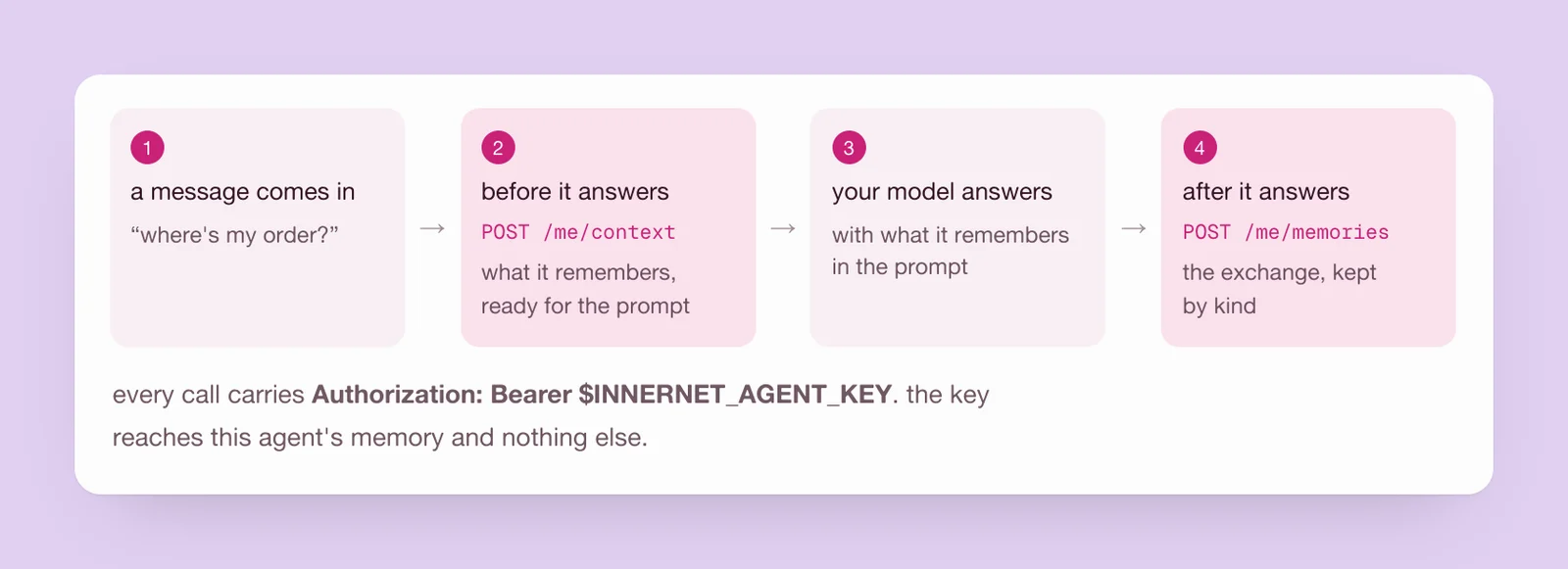
see the two calls your agent makes, line by line: wire it into your code.
every chapter
one memory, every ai tool.
innernet is memory your ai tools read live: every project, every decision, every skill, in one place, connected once.