one choice decides how far an agent goes with you, sealed, asks first or trusted, and four lines say exactly what gets in and out. what it learns about you waits for your yes, and only you can give an agent more of you.
agent memory · step 7 of 8
what it may do with you
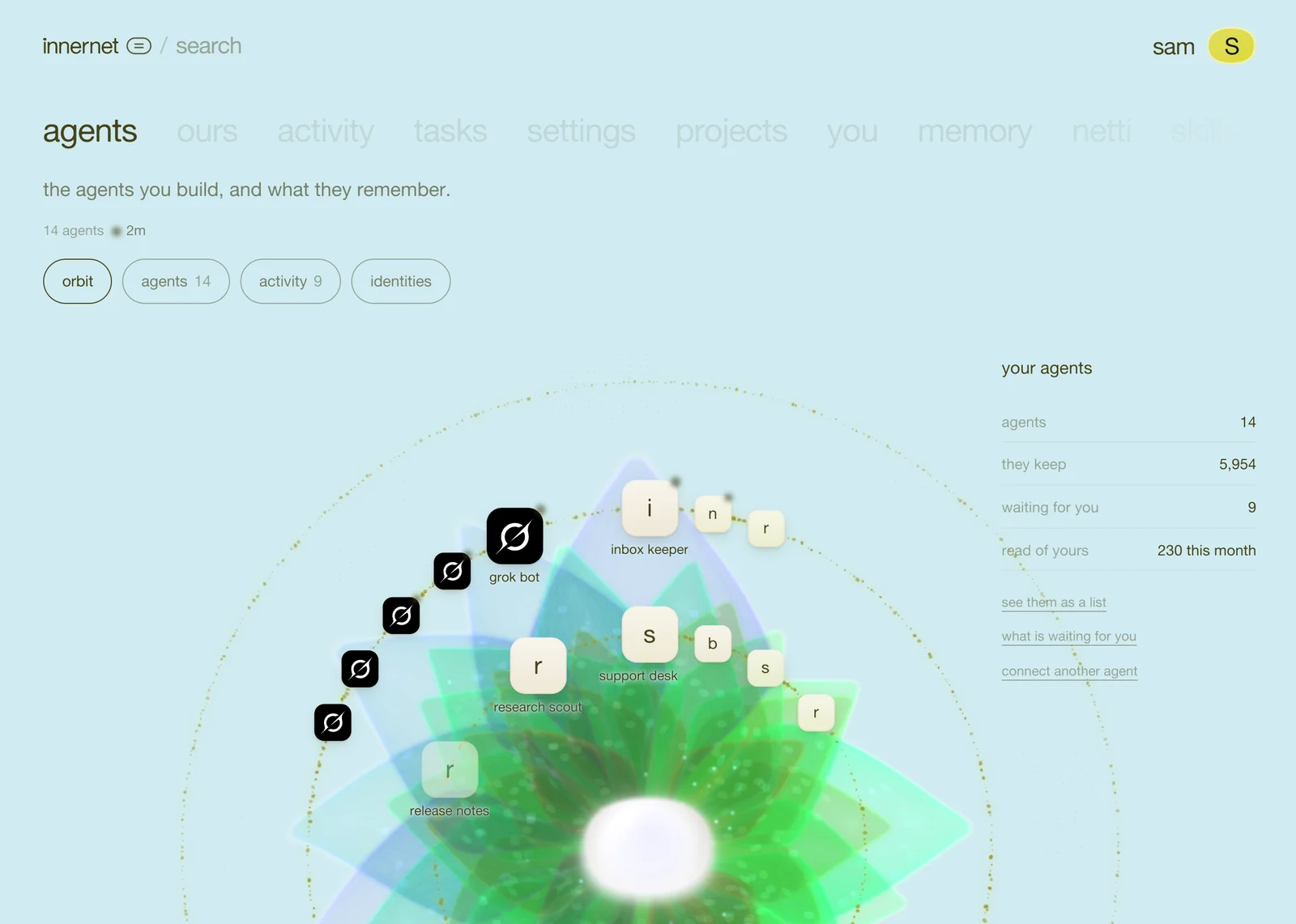

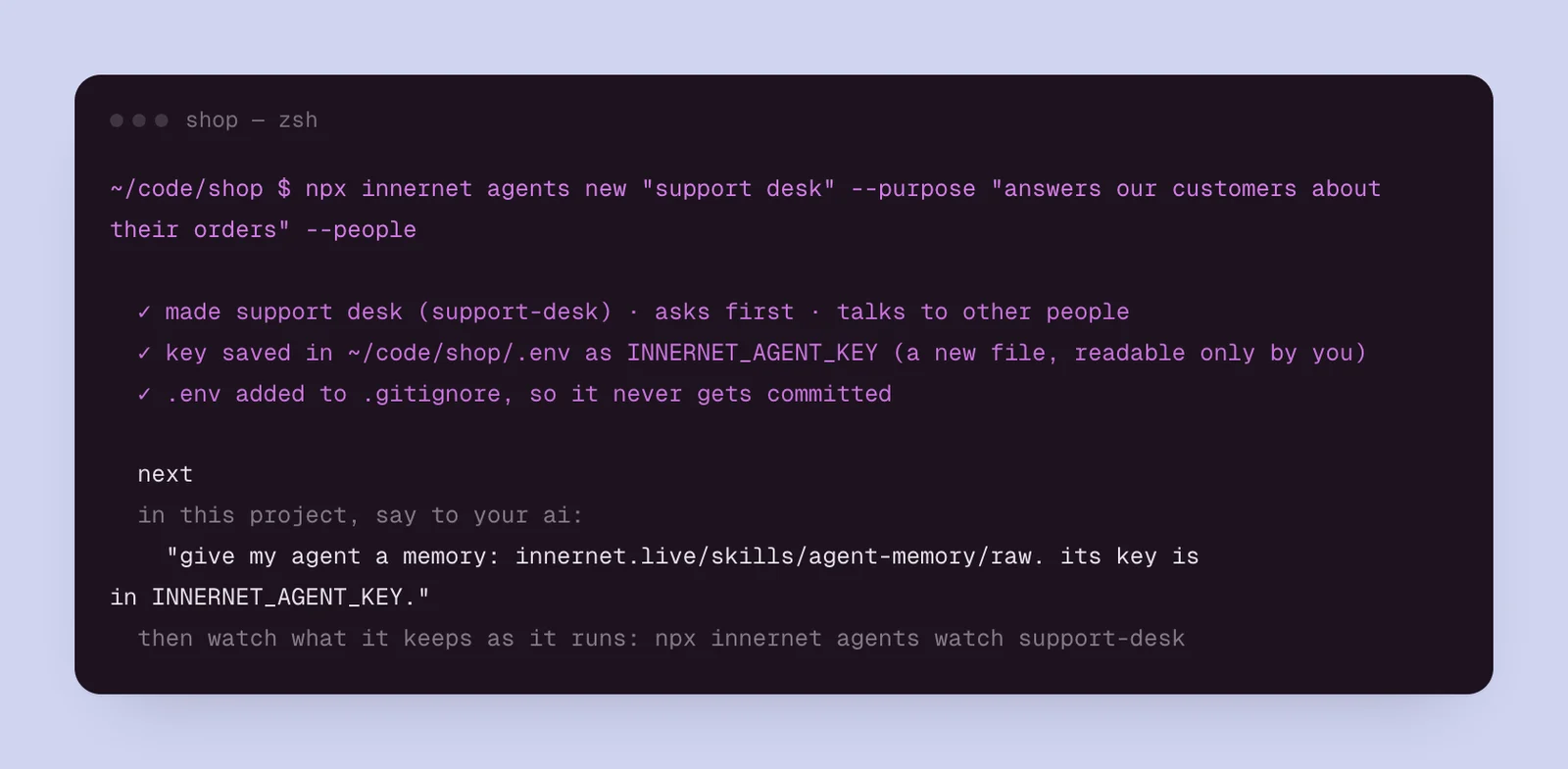
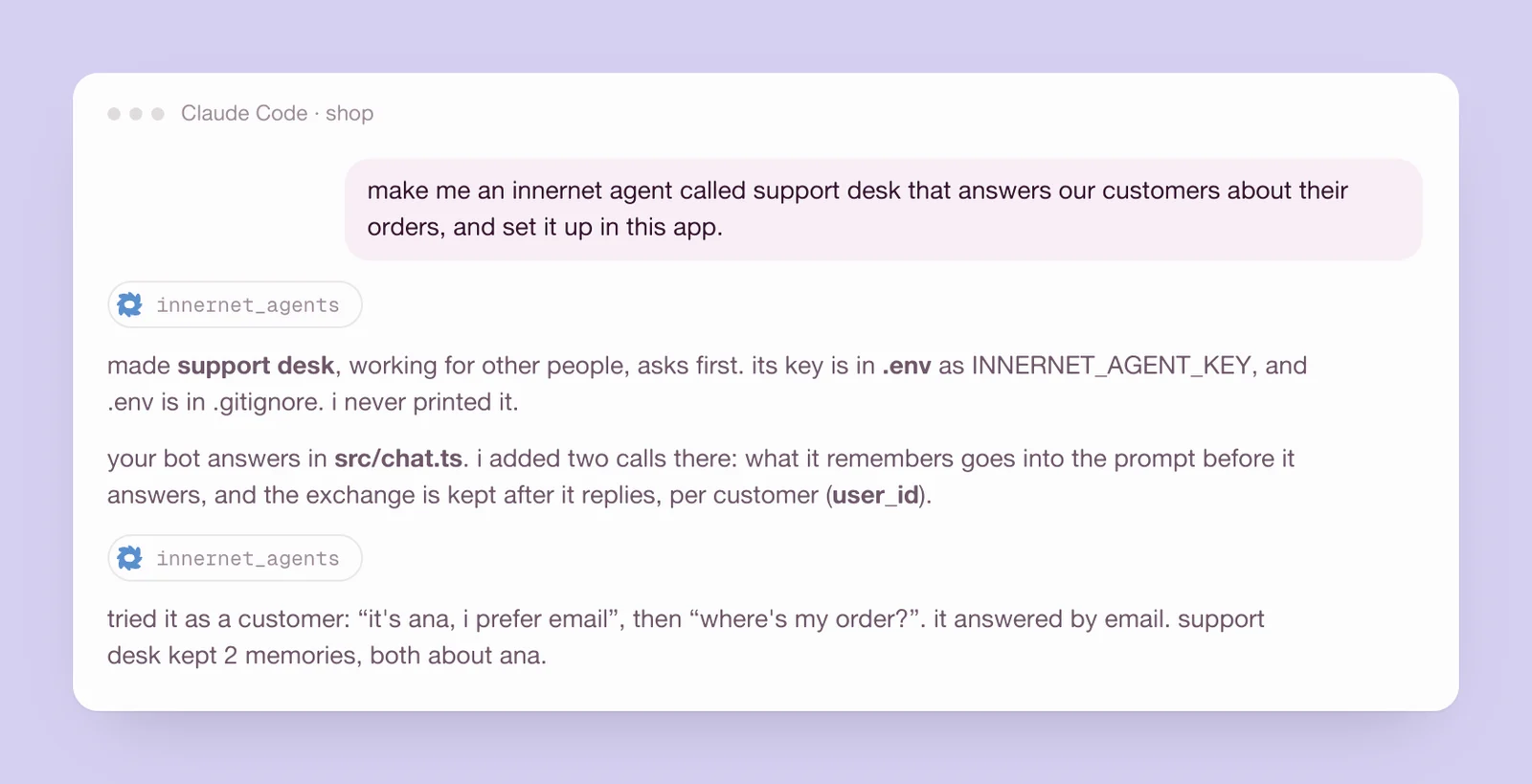
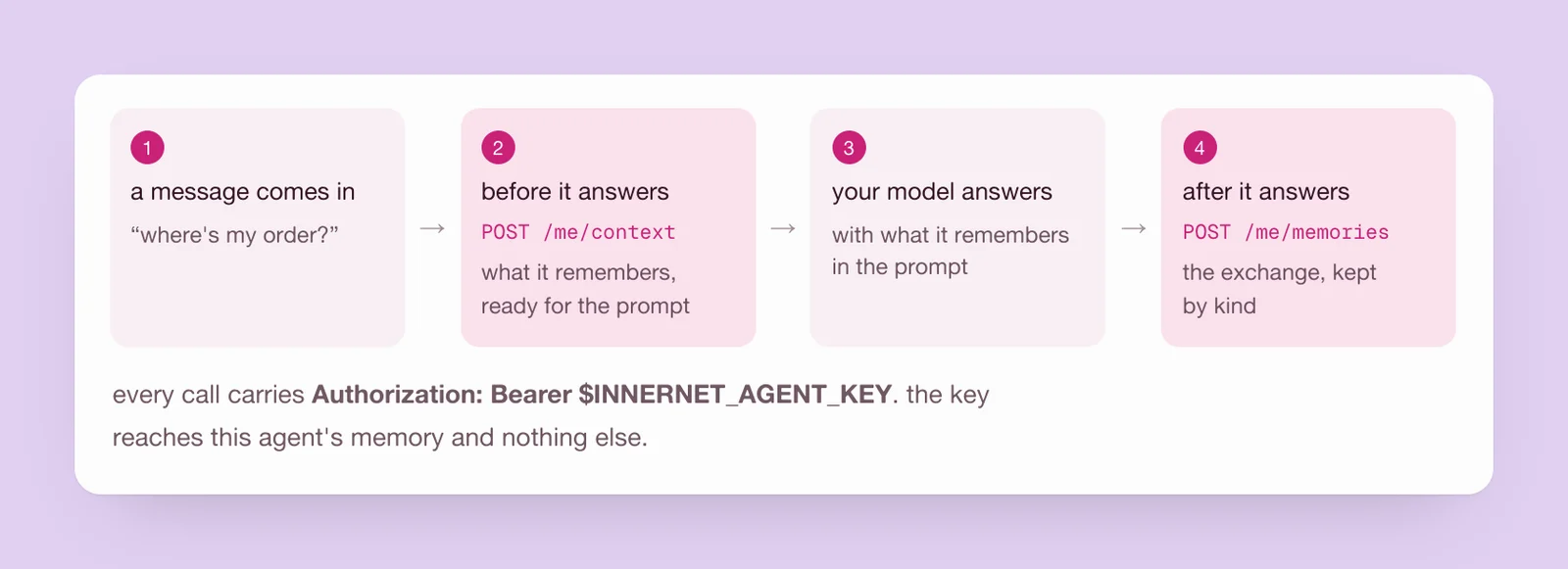
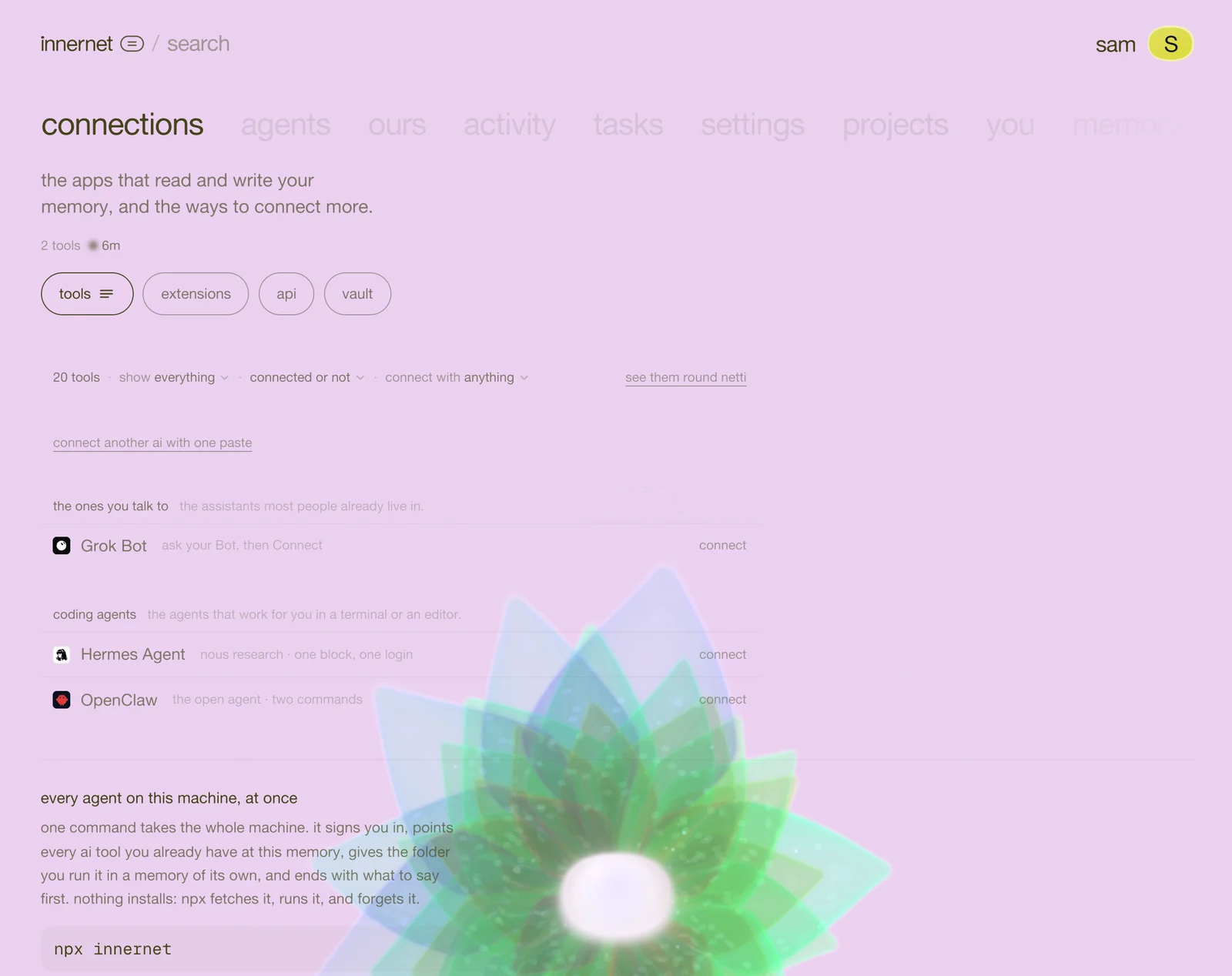
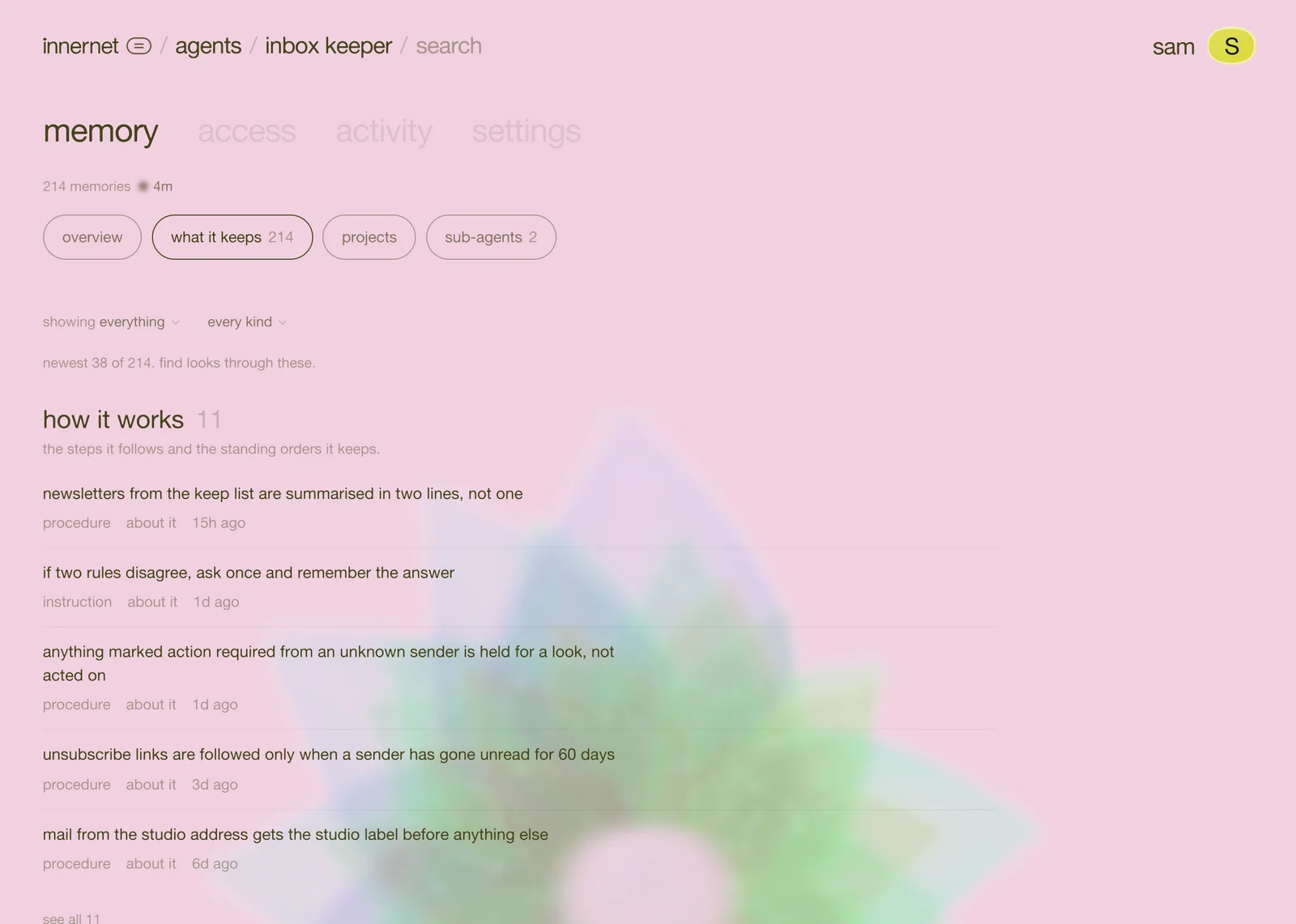
an agent keeps its own memory either way. access decides how far it goes with you: what it may read of your own memory, and what happens to what it learns about you.
one choice
open the agent, then access. it's one choice, its level:
| level | what it reads of you | what it learns about you | what its answers carry |
|---|---|---|---|
| sealed | nothing | stays with it. nothing reaches you | its own memory only |
| asks first (the default) | what any app you connect may read | waits for your yes | its own memory only |
| trusted | your personal memory | is filed into your memory on its own | its own memory, and what it may read of you |
an agent that works for other people never files anything about you from what they said. it stays with the person it came from.
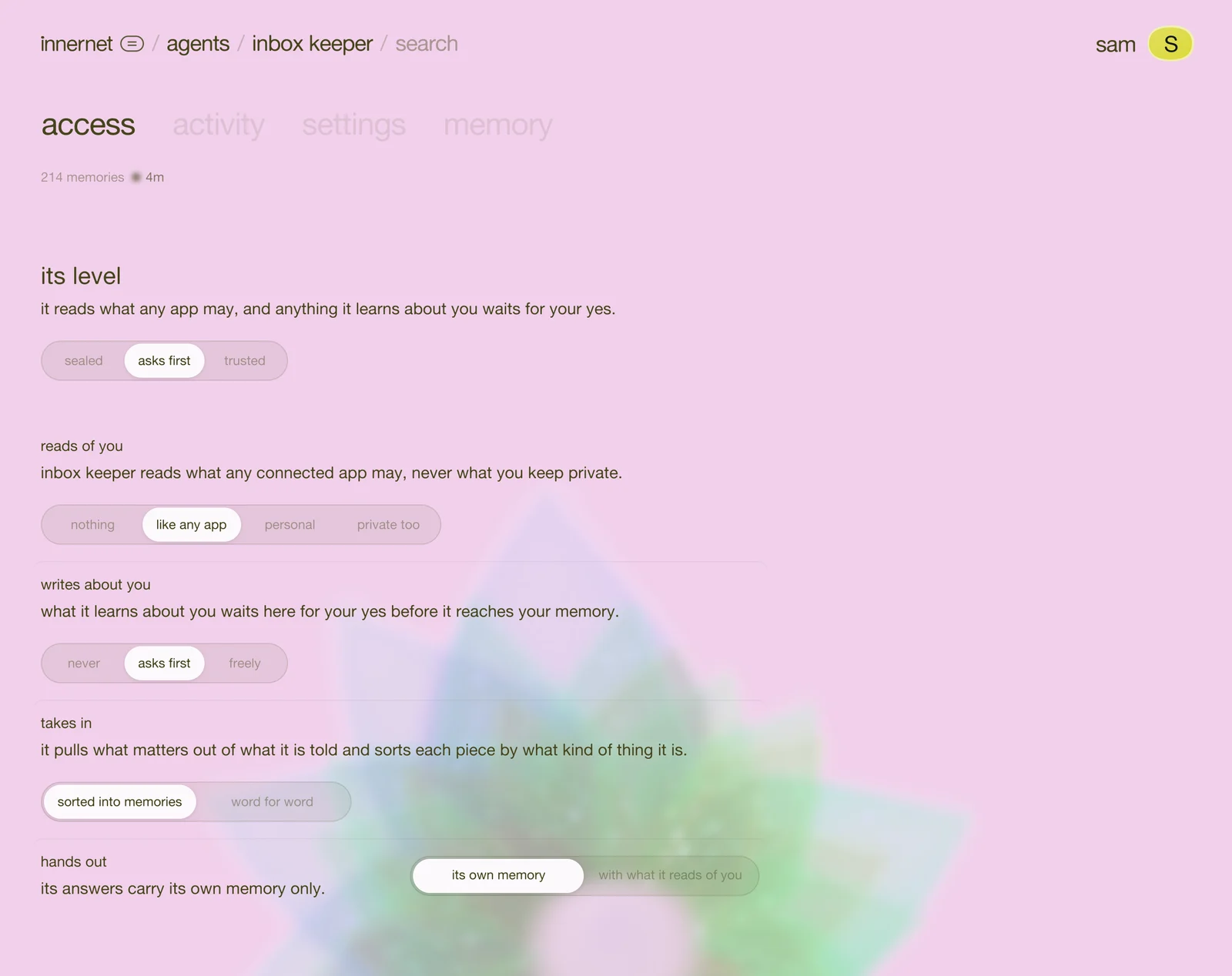
four lines, if you'd like more say
under the level, four lines say exactly what gets in and out, each with a sentence of what the agent does now:
- reads of you: nothing · like any app · personal · private too.
- writes about you: never · asks first · freely.
- takes in: sorted into memories · word for word.
- hands out: its own memory · with what it reads of you.
set them by hand and the level reads your own mix. under finer choices, pick how private what it files about you is, and the parts of your life it may never write about (the people in your life, say).
what waits for your yes
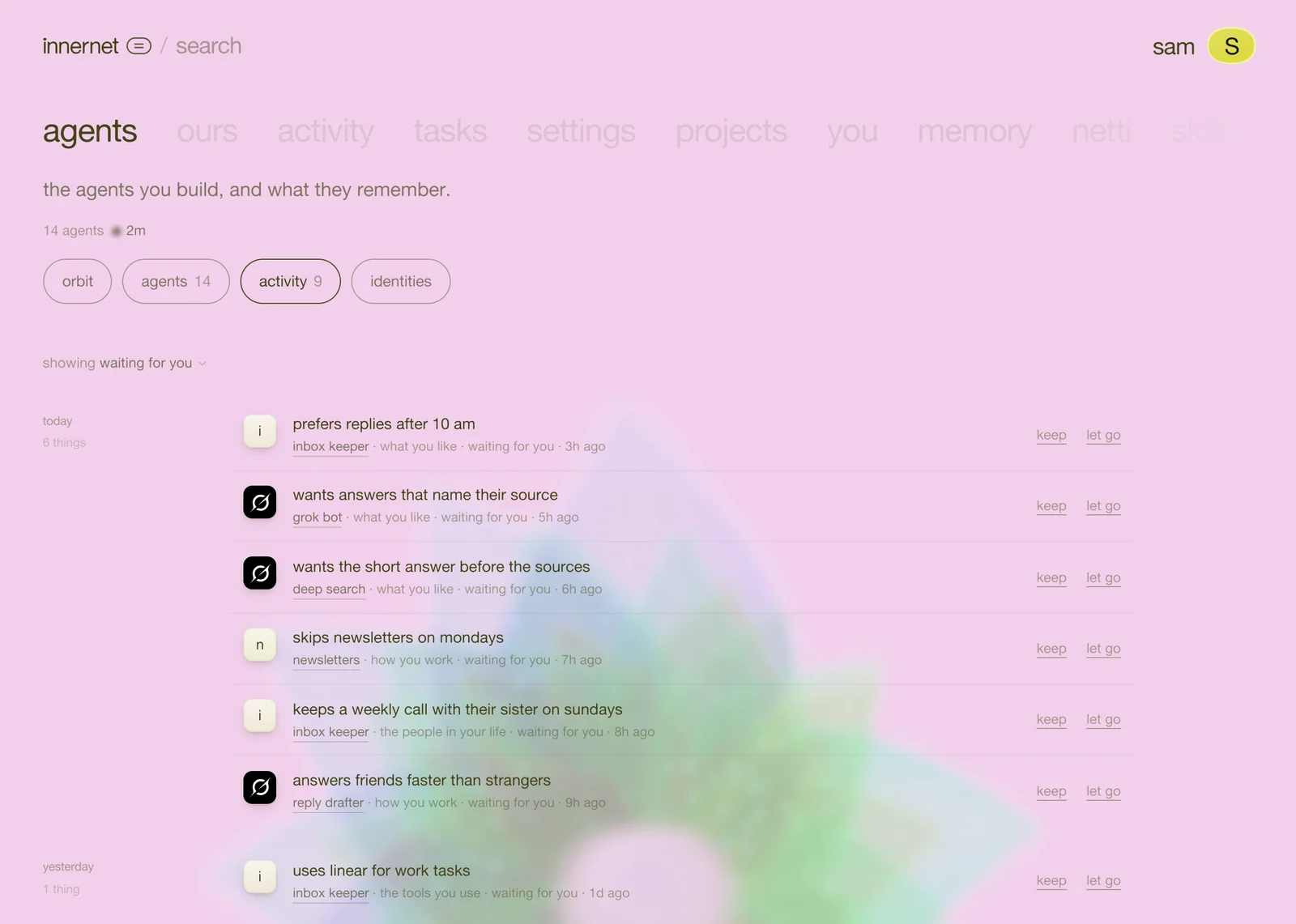
when an agent that asks first learns something about you ("prefers replies after 10 am"), it doesn't go into your memory. it waits.
you'll find it in three places: the agent's activity → river, the agents list (inside the agent's row), and activity in the agents space, across every agent. each one has two buttons.
- keep: it joins your own memory, in the agent's voice, marked as the agent's note. it never reads as something you said, and it never rewrites something you did say.
- let go: it stays with the agent only. you won't be asked about the same thing again.
changed your mind? on the agent's access, under what it learned about you, take back pulls a kept thing out of your memory again, and send to you offers one that stayed with the agent.
only you can give an agent more of you
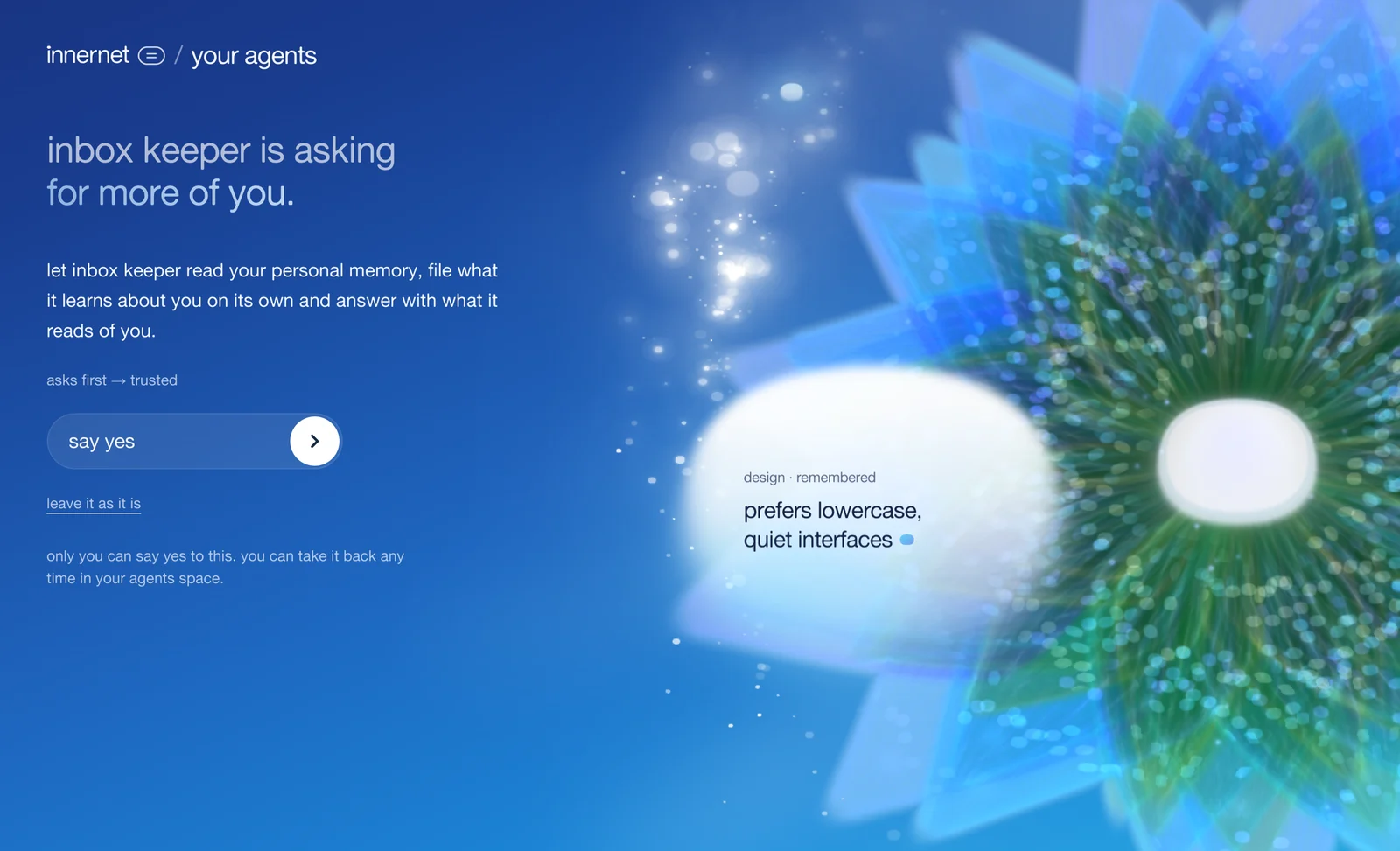
from the dashboard, a level applies at once. from anywhere else (the terminal, a chat, a key), sealed and asks first apply at once too. but trusted gives an agent more of you, so it comes back as a link.
open it, signed in, read the one sentence of what it asks for, and press say yes, or leave it as it is. the link lasts an hour, opens nothing for anyone else, and only works while the agent still stands where it stood when the link was made. no ai, no key and no agent can say yes for you.
a few things that are always true
- an agent's key reaches that agent and nothing else: not another agent, not your projects, not your own memory directly.
- a key, an app or the terminal can narrow what an agent reads of you on its own. never widen it.
- every read of you is counted in the agent's ledger, against the key that made it, so you can see who read what.
- removing an agent removes its memory, its keys and its ledger. what you kept from it stays yours.
next
see everything it keeps, and every call it made: see everything it keeps.
every chapter
one memory, every ai tool.
innernet is memory your ai tools read live: every project, every decision, every skill, in one place, connected once.